Digital Transformation in Healthcare: Benefits, Technologies & Future Trends
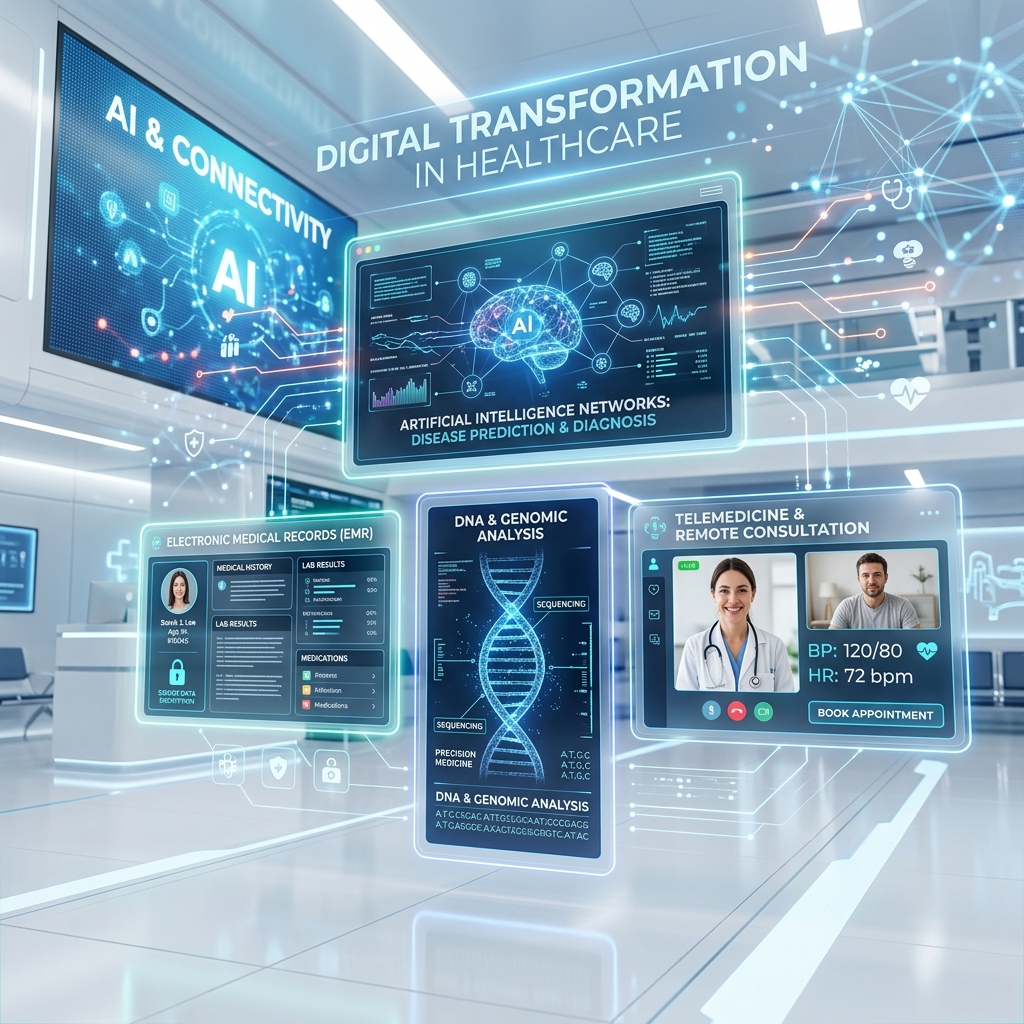
Digital Transformation in Healthcare: How Technology Is Revolutionizing Patient Care in India
Introduction
Healthcare is experiencing one of the most significant transformations in its history. Across India and around the world, hospitals, clinics, diagnostic centers, pharmacies, and healthcare providers are embracing digital technologies to improve patient care, streamline operations, and enhance clinical outcomes.
The traditional healthcare model relied heavily on paper records, manual processes, fragmented communication, and disconnected systems. While these methods served healthcare organizations for decades, they often resulted in inefficiencies, delays, administrative burdens, and limited access to critical patient information.
Today, digital transformation is reshaping every aspect of healthcare delivery. From electronic medical records and telemedicine to artificial intelligence and cloud-based hospital management systems, technology is helping healthcare providers deliver faster, safer, and more efficient care.
As patient expectations continue to evolve, healthcare organizations must adopt modern digital solutions that support clinical excellence, operational efficiency, and long-term sustainability.
This article explores how digital transformation is changing healthcare, why it matters, and how modern healthcare technology platforms such as HMSX help organizations prepare for the future.
What Is Digital Transformation in Healthcare?
Digital transformation in healthcare refers to the integration of advanced technologies into healthcare operations, patient care processes, clinical workflows, and administrative functions.
The objective is not simply to replace paper with computers. Instead, digital transformation aims to create connected healthcare ecosystems where information flows seamlessly between departments, healthcare professionals, and patients.
Digital healthcare technologies include:
- Electronic Medical Records (EMR)
- Electronic Health Records (EHR)
- Hospital Management Systems
- Telemedicine Platforms
- Patient Portals
- Artificial Intelligence Solutions
- Mobile Health Applications
- Cloud Computing
- Healthcare Analytics
- Remote Patient Monitoring
Together, these technologies help healthcare organizations improve service delivery while reducing operational complexity.
Why Healthcare Organizations Are Going Digital
Several factors are driving digital transformation across healthcare institutions.
Growing Patient Expectations
Modern patients expect healthcare services to be accessible, convenient, and responsive.
Patients increasingly prefer:
- Online appointment booking
- Digital prescriptions
- Instant access to reports
- Online consultations
- Mobile healthcare applications
Healthcare organizations that provide digital experiences often achieve higher patient satisfaction and retention rates.
Increasing Operational Complexity
Hospitals manage thousands of clinical and administrative processes every day.
Without integrated systems, managing:
- Appointments
- Admissions
- Billing
- Pharmacy operations
- Laboratory workflows
- Medical records
can become extremely challenging.
Digital platforms help simplify these operations.
Need for Better Data Management
Healthcare generates enormous amounts of data.
Digital systems ensure patient information remains:
- Accurate
- Accessible
- Secure
- Searchable
- Actionable
This improves clinical decision-making and operational efficiency.
Regulatory and Compliance Requirements
Healthcare organizations must maintain detailed records and meet various compliance standards.
Digital systems help hospitals maintain transparency and accountability.
Benefits of Digital Healthcare Transformation
Improved Patient Care
Digital systems provide healthcare professionals with immediate access to comprehensive patient information.
Doctors can review:
- Medical histories
- Previous diagnoses
- Laboratory reports
- Medication records
- Imaging results
before making treatment decisions.
This supports safer and more effective patient care.
Reduced Waiting Times
Manual workflows often create bottlenecks.
Digital appointment scheduling, automated registration, and intelligent queue management significantly reduce waiting times.
Patients receive care faster and more efficiently.
Better Communication
Technology improves communication between:
- Patients
- Doctors
- Nurses
- Laboratories
- Pharmacies
- Administrators
Real-time information sharing improves coordination across healthcare departments.
Increased Productivity
Automation eliminates repetitive tasks.
Healthcare professionals can focus more on patient care rather than administrative paperwork.
This increases productivity throughout the organization.
Improved Financial Performance
Healthcare organizations benefit from:
- Accurate billing
- Reduced revenue leakage
- Better claims management
- Improved financial reporting
Digital systems support sustainable growth and profitability.
The Role of Electronic Medical Records
Electronic Medical Records have become a cornerstone of modern healthcare.
Unlike traditional paper files, EMRs provide:
- Centralized patient information
- Real-time updates
- Faster access to records
- Reduced duplication
- Improved documentation accuracy
Healthcare professionals can access critical information instantly, improving clinical efficiency and patient outcomes.
Telemedicine and Virtual Healthcare
Telemedicine has transformed patient access to healthcare services.
Virtual consultations enable patients to receive medical advice without visiting healthcare facilities physically.
Benefits include:
- Improved accessibility
- Reduced travel requirements
- Faster consultations
- Better follow-up care
- Expanded healthcare reach
Telemedicine continues to play a vital role in healthcare delivery, especially in underserved regions.
Artificial Intelligence in Healthcare
Artificial Intelligence is becoming increasingly important in modern healthcare environments.
AI supports:
- Clinical decision support
- Appointment optimization
- Patient risk prediction
- Medical imaging analysis
- Workflow automation
- Predictive analytics
Healthcare organizations use AI to improve efficiency while supporting better patient outcomes.
Cloud Technology in Healthcare
Cloud computing enables healthcare organizations to access critical information securely from virtually anywhere.
Advantages include:
- Lower infrastructure costs
- Improved scalability
- Faster deployment
- Enhanced collaboration
- Disaster recovery capabilities
Cloud-based healthcare systems are rapidly becoming the preferred choice for hospitals and clinics across India.
Healthcare Analytics and Data-Driven Decisions
Healthcare leaders increasingly rely on analytics to guide decision-making.
Analytics help organizations understand:
- Patient trends
- Department performance
- Financial performance
- Resource utilization
- Operational bottlenecks
Data-driven healthcare organizations are better positioned to improve efficiency and patient satisfaction.
Cybersecurity in Healthcare
As healthcare becomes increasingly digital, protecting patient information becomes even more important.
Healthcare organizations must implement:
- Secure authentication
- Data encryption
- Access controls
- Audit trails
- Backup strategies
Maintaining strong cybersecurity practices protects both patients and healthcare providers.
How Hospital Management Systems Support Digital Transformation
A Hospital Management System serves as the foundation of healthcare digital transformation.
Modern hospital management platforms connect:
- Patient Registration
- Appointment Scheduling
- OPD Management
- IPD Management
- Pharmacy Operations
- Laboratory Services
- Radiology Departments
- Billing Processes
- Insurance Workflows
- Human Resources
- Reporting and Analytics
By integrating these functions into a single platform, hospitals improve efficiency and reduce operational complexity.
HMSX: Supporting the Future of Digital Healthcare
HMSX is designed to help healthcare organizations embrace digital transformation through an integrated hospital management platform.
HMSX supports:
- Outpatient Management
- Inpatient Management
- Electronic Medical Records
- Laboratory Management
- Pharmacy Management
- Billing and Finance
- Insurance Processing
- Multi-Branch Operations
- Cloud Accessibility
- Analytics and Reporting
Healthcare organizations can manage clinical, operational, and financial activities from a centralized system.
The platform is designed to improve efficiency, enhance patient experiences, and support sustainable healthcare growth.
The Future of Healthcare Technology
Healthcare technology continues to evolve rapidly.
Future innovations are expected to include:
- AI-assisted diagnostics
- Predictive healthcare analytics
- Smart hospitals
- Remote patient monitoring
- Personalized medicine
- Voice-enabled clinical documentation
- Advanced interoperability
Healthcare organizations investing in digital transformation today will be better prepared to meet future challenges and opportunities.
Conclusion
Digital transformation is no longer a future concept. It is a present-day necessity for healthcare organizations seeking to improve patient care, streamline operations, and remain competitive in an increasingly technology-driven world.
By adopting modern digital healthcare solutions, hospitals and clinics can reduce inefficiencies, improve clinical outcomes, enhance patient experiences, and strengthen organizational performance.
As healthcare continues to evolve, platforms such as HMSX provide the technological foundation needed to support modern healthcare delivery and long-term success.
Organizations that embrace digital transformation today will be better positioned to deliver exceptional patient care tomorrow.
Ready to implement AI in your hospital?
Contact our specialists today to schedule a personalized demo of the HMSX Intelligence Engine.
Book Your Demo