Future of Smart Hospitals and Digital Healthcare: The Next Revolution
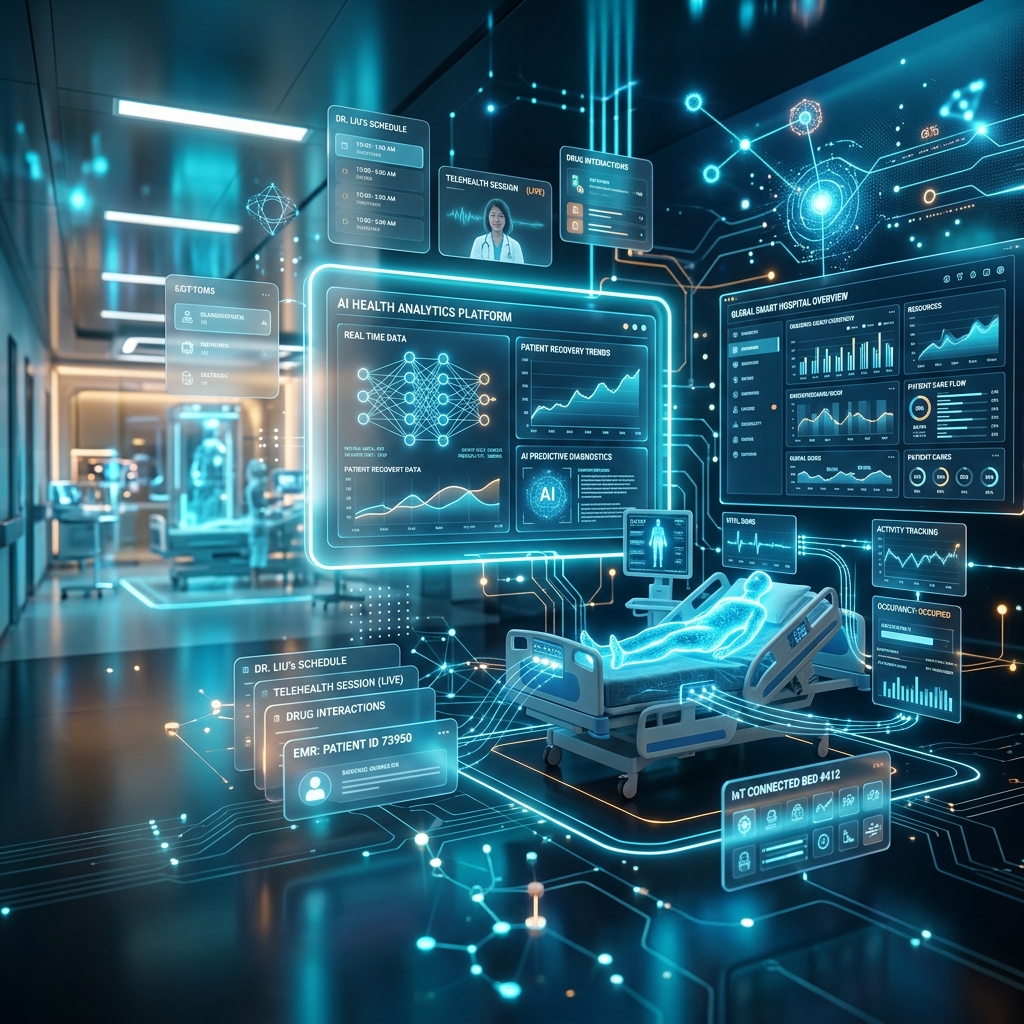
Future of Smart Hospitals and Digital Healthcare: Transforming Patient Care Through Technology
Introduction
Healthcare is undergoing one of the most significant transformations in human history. Advances in technology are reshaping how hospitals operate, how doctors diagnose diseases, and how patients receive care. The traditional hospital model, which heavily relied on paperwork, manual workflows, and disconnected systems, is rapidly evolving into a digitally connected ecosystem.
The future belongs to smart hospitals—healthcare institutions powered by intelligent technologies, real-time data, automation, artificial intelligence, and integrated digital platforms. These hospitals are designed to improve patient outcomes, optimize operational efficiency, reduce costs, and deliver exceptional healthcare experiences.
As healthcare demands continue to increase worldwide, smart hospitals supported by advanced platforms like HMSX Hospital Management Software will play a critical role in shaping the next generation of healthcare delivery.
What Is a Smart Hospital?
A smart hospital is a healthcare facility that uses advanced digital technologies to automate processes, connect departments, enhance clinical decision-making, and improve patient care.
Unlike traditional hospitals where information is often scattered across multiple systems, smart hospitals create a unified digital environment where data flows seamlessly between departments.
Smart hospitals typically integrate:
- Electronic Medical Records (EMR)
- Hospital Management Systems
- Artificial Intelligence
- Internet of Things (IoT)
- Telemedicine
- Cloud Computing
- Healthcare Analytics
- Smart Medical Devices
- Automated Workflows
- Digital Patient Engagement Tools
The primary goal is simple: deliver better care while improving efficiency across the entire healthcare organization.
Why Digital Healthcare Is Becoming Essential
Healthcare systems around the world face increasing challenges:
- Growing patient populations
- Rising healthcare costs
- Shortage of healthcare professionals
- Increased chronic diseases
- Higher patient expectations
- Complex regulatory requirements
Digital healthcare helps address these challenges by improving access to information, automating repetitive tasks, and enabling healthcare professionals to focus more on patient treatment.
Hospitals that embrace digital transformation are better equipped to deliver high-quality care while maintaining operational excellence.
Artificial Intelligence Will Redefine Healthcare
Artificial Intelligence (AI) is expected to become one of the most influential technologies in healthcare.
Future hospitals will increasingly use AI to support:
Disease Detection
AI systems can analyze medical images, laboratory reports, and patient histories to identify potential health conditions quickly and accurately.
Clinical Decision Support
Doctors can use AI-generated insights to assist with diagnosis and treatment planning.
Predictive Healthcare
AI can identify patients who may be at risk of developing serious conditions before symptoms become severe.
Resource Optimization
Hospitals can use AI to predict patient volumes, staffing needs, and resource requirements.
By reducing uncertainty and improving decision-making, AI will help healthcare providers deliver safer and more effective care.
Internet of Things (IoT) Will Create Connected Hospitals
The Internet of Things is transforming hospitals into intelligent environments where devices continuously communicate with one another.
Examples include:
- Smart patient monitoring systems
- Connected infusion pumps
- Wearable health devices
- Smart hospital beds
- Temperature monitoring systems
- Asset tracking solutions
IoT technology allows healthcare providers to monitor patient conditions in real time and respond quickly when intervention is needed.
Connected healthcare environments reduce delays, improve safety, and enhance overall patient experiences.
Electronic Medical Records Will Become Smarter
Electronic Medical Records have already replaced paper-based records in many healthcare facilities.
The next generation of EMR systems will provide:
- Intelligent clinical recommendations
- Automated documentation assistance
- Real-time patient insights
- Predictive risk alerts
- Personalized treatment suggestions
When integrated with HMSX, healthcare providers gain instant access to complete patient histories, enabling faster and more informed medical decisions.
Telemedicine Will Expand Beyond Virtual Consultations
Telemedicine has become an important part of modern healthcare.
In the future, telemedicine will include:
- Remote specialist consultations
- Virtual follow-up care
- Chronic disease monitoring
- Home-based healthcare services
- Mental health support
- Remote diagnostics
Patients will increasingly receive healthcare services without needing to visit hospitals physically.
This expansion improves accessibility while reducing pressure on healthcare facilities.
Healthcare Analytics Will Drive Better Decisions
Modern hospitals generate enormous amounts of data every day.
Future healthcare organizations will rely heavily on analytics to understand:
- Patient trends
- Disease patterns
- Treatment effectiveness
- Operational performance
- Financial performance
- Resource utilization
Advanced analytics platforms integrated with HMSX can transform raw data into actionable insights.
Healthcare leaders can use these insights to continuously improve patient outcomes and hospital efficiency.
Cloud Technology Will Power Healthcare Innovation
Cloud computing is becoming the foundation of digital healthcare transformation.
Cloud-based healthcare systems offer:
- Secure data storage
- Real-time accessibility
- Multi-location management
- Disaster recovery capabilities
- Simplified maintenance
- Faster software updates
Hospitals can scale operations more efficiently while reducing infrastructure costs.
Cloud-powered healthcare also enables collaboration across departments, branches, and healthcare networks.
Automation Will Eliminate Administrative Burdens
Healthcare professionals spend significant time on administrative tasks.
Future smart hospitals will automate processes such as:
- Appointment scheduling
- Patient registration
- Billing
- Insurance processing
- Inventory management
- Staff scheduling
- Compliance reporting
Automation reduces manual workload and allows healthcare teams to dedicate more time to patient care.
Personalized Healthcare Will Become Standard Practice
Healthcare is moving away from generalized treatment approaches.
Future care models will focus on:
- Individual patient histories
- Genetic information
- Lifestyle factors
- Medical risk profiles
- Personalized treatment plans
Digital healthcare platforms help providers deliver more targeted and effective care.
Patients receive treatment plans tailored specifically to their unique needs.
Smart Hospital Infrastructure
The physical hospital environment itself is becoming smarter.
Future healthcare facilities may include:
Smart Rooms
Patient rooms equipped with connected devices and automated monitoring systems.
Smart Beds
Beds capable of tracking patient movement, vital signs, and recovery progress.
Smart Asset Management
Real-time tracking of medical equipment and critical assets.
Smart Energy Management
Automated systems that optimize energy consumption and reduce operational costs.
These innovations improve both patient experiences and hospital efficiency.
Cybersecurity Will Be a Top Priority
As healthcare becomes increasingly digital, protecting patient information becomes even more important.
Future healthcare organizations will invest heavily in:
- Data encryption
- Multi-factor authentication
- Access controls
- Security monitoring
- Compliance management
- Threat detection systems
Strong cybersecurity practices help maintain trust while ensuring regulatory compliance.
Patient Experience Will Become a Competitive Advantage
The future healthcare landscape will be highly patient-centric.
Hospitals will focus on delivering:
- Faster services
- Reduced waiting times
- Digital communication
- Online appointments
- Mobile health access
- Personalized healthcare journeys
Patients will increasingly choose healthcare providers that offer convenient, efficient, and digitally enabled experiences.
Role of HMSX in Building Smart Hospitals
HMSX Hospital Management Software serves as a digital foundation for modern healthcare organizations.
HMSX supports smart hospital initiatives through:
- Integrated patient management
- OPD and IPD automation
- Electronic Medical Records
- Laboratory integration
- Pharmacy management
- Billing automation
- Analytics dashboards
- Multi-branch management
- Cloud-based accessibility
- Real-time reporting
By connecting every department into a unified ecosystem, HMSX enables hospitals to accelerate their digital transformation journey.
Benefits of Smart Hospitals
Healthcare organizations adopting smart hospital technologies can expect:
- Improved patient outcomes
- Enhanced patient satisfaction
- Faster diagnosis and treatment
- Better resource utilization
- Reduced operational costs
- Increased staff productivity
- Higher clinical accuracy
- Improved compliance
- Stronger financial performance
These benefits create a sustainable model for long-term healthcare success.
Future Trends to Watch
Several emerging trends are expected to shape the future of healthcare:
- AI-assisted diagnostics
- Predictive healthcare analytics
- Virtual hospitals
- Digital twins in healthcare
- Robotic process automation
- Smart wearable integration
- Voice-enabled healthcare systems
- Remote patient monitoring
- Precision medicine
- Intelligent hospital ecosystems
Hospitals that adopt these innovations early will gain significant competitive advantages.
Conclusion
The future of healthcare is intelligent, connected, data-driven, and patient-focused. Smart hospitals powered by digital healthcare technologies will transform how medical services are delivered, improving outcomes for patients while enhancing operational efficiency for healthcare providers.
Artificial intelligence, automation, cloud computing, IoT, analytics, and integrated hospital management platforms are no longer concepts of the future—they are becoming essential components of modern healthcare.
HMSX Hospital Management Software helps healthcare organizations prepare for this transformation by providing a comprehensive digital ecosystem that supports smarter operations, better decision-making, and exceptional patient care.
As healthcare continues to evolve, smart hospitals will become the new standard, and organizations that embrace digital innovation today will be the leaders of tomorrow.
Ready to implement AI in your hospital?
Contact our specialists today to schedule a personalized demo of the HMSX Intelligence Engine.
Book Your Demo